This is one of those topics that tends to split opinion, and it’s something being talked about more in coaching circles right now. Depending on who you ask, you’ll get very different views. Some see models as essential. Others see them as limiting. Like most things, the truth probably sits somewhere in the middle.
Still, it’s a conversation worth having.
Lately I’ve been thinking a lot about why certain swings get held up as “the model” and why so many golfers are encouraged to copy them. There’s no doubt that studying great movers has value. Looking at high-level players can help us understand patterns, tendencies, and principles that show up again.
But somewhere along the way, models stopped being references and started becoming rules. And that’s where I think we need to pause.
Most golfers simply don’t have the same body type, movement history, time availability, or physical capacity as elite players. Expecting everyone to move the same way ignores reality. More importantly, it often pulls attention away from what helps people play better golf.
A good-looking swing doesn’t automatically mean an effective one. Chasing positions for the sake of appearance can move players further away from performance rather than closer to it.
This is where golf coaching can quietly drift into what I’d call “swing beautification.” The swing looks great on video, but when the player gets on the course, things don’t always hold together. Pressure creeps in. Decision-making breaks down. Confidence fades. The movement they’ve been trying to copy doesn’t really belong to them.
From a coaching point of view, that matters.
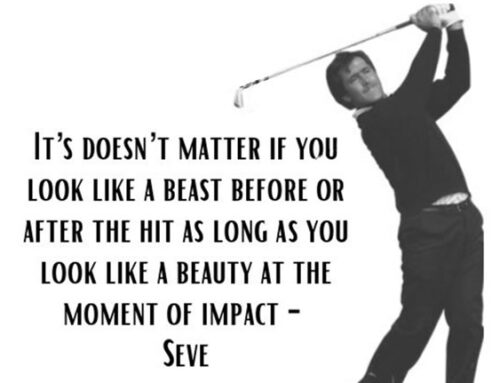
Models absolutely have value. They help us understand principles. They give structure. They sharpen our eye. But they should never become rigid templates that everyone is forced into. Golf has never worked like that. Some of the best players in history didn’t look textbook at all, yet they found ways to strike the ball consistently and perform when it mattered.
The more important question isn’t “what swing should we copy?”
It’s “how does this player learn, adapt, and perform best?”
That shifts the focus away from positions and toward process.
A lot of real learning doesn’t come from being told what to do. It comes from problem-solving. From being put in situations where players must feel, explore, and make decisions. When practice is built around tasks rather than constant technical instruction, players develop awareness, adaptability, and ownership of their movement.
That’s where learning starts to stick.
When players are encouraged to reflect, self-correct, and understand cause and effect, they stop relying on constant feedback. They begin to trust themselves. And that’s when practice starts to transfer to the course, because the understanding belongs to them, not the coach.
There’s also a moral side to this that I think matters.
As coaches, people trust us with more than technique. They trust us with their confidence, their motivation, and often their enjoyment of the game. If we overemphasise perfection or rigid models, we risk making players feel broken when they don’t fit the mould. Most golfers aren’t broken. They’re just human.
Good golf coaching should bring clarity, not confusion. Direction, not dependency. Confidence, not constant correction.
Technique still matters, of course. But it should support performance, not dominate it. It should help players make better decisions, adapt under pressure, and play with freedom rather than fear.
In the end, coaching isn’t about creating copies. It’s about helping people become better versions of themselves. Helping them learn how to learn. Helping them think more clearly under pressure. Helping them enjoy the process while improving over time.
If we can hold ourselves to that standard, then conversations around models, methods, and mechanics become healthier and more honest. And more importantly, the players we work with are far better served by it.
I think this is why it’s important to separate motions into categories of:
1. Which ones create desired impacts
2. Which ones increase consistency
3. Which ones maximise speed
Then we can add these elements to existing swings (without the need to overhaul or adhere to a specific model).
For more information about performance coaching at Golf-4U or to make a booking – please click the links below.
Image Provided by Gemma Lorrain Photography www.gemmalorrainphotography.com – subject to Copyright.